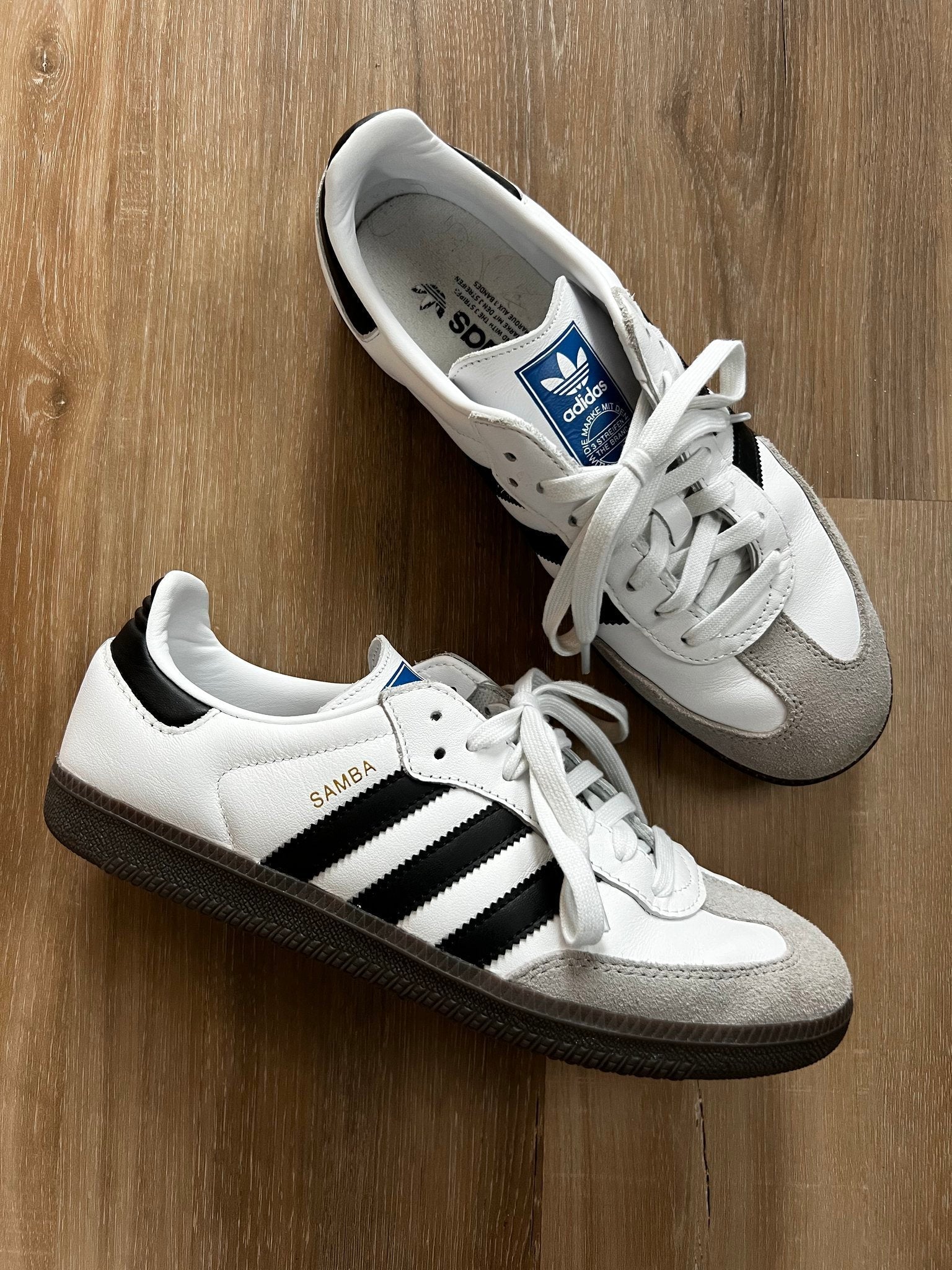

You’ve seen them. On the subway, at the cafe, in the gallery, on your most stylish friend. The slim silhouette, the suede T-toe, the gum sole. The Adidas Samba is not just popular; it has become a kind of cultural wallpaper—a shoe so ubiquitous it risks being seen as nothing more than a fleeting trend.
But that would be a dangerously lazy analysis.
The Samba’s current dominance is not a sudden explosion of hype. It is the final, quiet victory of a 75-year-old design. It’s a case study in how authenticity, utility, and subcultural adoption create a legacy that no marketing campaign could ever manufacture. This is not a report on a trend. This is an autopsy of a classic.
From the Archives: The Pitch
Before it was a fashion staple, the Samba was a tool. Born in Germany in 1949, its purpose was singular and brutally functional: to give football players traction on frozen, icy pitches. The iconic gum rubber outsole was a technological solution. For decades, this was its identity—a reliable, low-profile indoor soccer shoe known only to those who used it for its intended purpose. It had no hype, no narrative. It simply worked.
Field Observations: The Subcultural Adoption
The journey from the pitch to the pavement is where the Samba's legend was written. This happened not by design, but by appropriation.
1. The UK "Terrace" Culture: In the 1970s and '80s, British football fans—the "casuals"—began adopting European sportswear as part of their subcultural uniform. They sought out rare trainers from the continent, and the Samba, with its German roots and clean lines, became a coveted piece. It was a subtle signal of belonging, a shoe that had to be sought out. It was a piece of insider knowledge.
2. 90s Skateboarding: As skateboarding moved away from bulky, padded shoes, skaters gravitated toward the Samba for the same reasons footballers did: its slim profile provided excellent board feel, and its durable construction could withstand abuse. This adoption further solidified the shoe's credentials as a tough, authentic piece of counter-culture equipment.
Modern Analysis: The Quiet Resurgence
So why, after decades of simmering in subcultures, has it exploded now? The current resurgence is a direct reaction to the loud, chaotic sneaker trends of the last decade.
After years of algorithm-driven hype, collaborations designed for resale, and chunky, over-designed "dad shoes," the Samba is an antidote. It is quiet. It is versatile. It is, by modern standards, refreshingly anonymous. Its rise signifies a collective fatigue with manufactured hype and a return to classic, proven designs. In a world of loud statements, the Samba is a confident whisper.
The Verdict: A New Standard
The Samba did not become a phenomenon because a brand told us it should. It was drafted into service by real communities who valued its utility and understated style. It spent decades as a secret handshake before it became a global trend.
Its ubiquity today is not a sign of fleeting fashion. It is the final confirmation of its status as a new standard—a piece of design so fundamentally correct that it outlasted the trends that were supposed to replace it. The Samba didn't infiltrate the culture; it earned its place, one subculture at a time.
The file on this case is clear: some things become popular because they're new. The Samba is popular because it is true.