
Remember the feeling of the water trembling in the cup in Jurassic Park? The pure, edge-of-your-seat magic as you realized something massive was on its way? Or the gritty, smart-aleck satisfaction of hearing John McClane mutter "Yippee-Ki-Yay" for the first time? There's nothing like the thrill of a movie that feels fresh, exciting, and new.
Now, contrast that with the feeling you get when you see the trailer for the ninth sequel, a soft reboot, or yet another prequel series nobody asked for. That initial spark of excitement is replaced by a familiar, weary sigh. Another one? Really?
This isn't a hit piece. Think of it more as a loving intervention for the stories we once adored. We're not here to hate on these movies, but to argue that their legacies are too important to be diluted by an endless stream of diminishing returns. Greatness deserves a great ending. So, let's take a look at the top 10 franchises that have more than earned a peaceful retirement.
So, before I start naming names, what makes a franchise a candidate for a gold watch and a pension? For me, it boils down to a few key symptoms.
Creative Bankruptcy: This is when a series stops innovating and starts photocopying itself. The plots become bafflingly convoluted (Terminator, I'm looking at you) or so absurd they become a full-blown parody. Once your car franchise goes to space, you might be creatively bankrupt.
Legacy Dilution: This one hurts the most. It’s when a new installment is so misguided or poorly made that it retroactively makes the classic originals feel a little bit worse. It tarnishes the memory.
Character Decay: This is when a once-iconic hero or villain becomes a running gag or a flat caricature of their former self. They stop being a character and start being a collection of catchphrases and tired mannerisms. They feel less like the hero you loved and more like a cover band of their former self.
The Top 10 List:
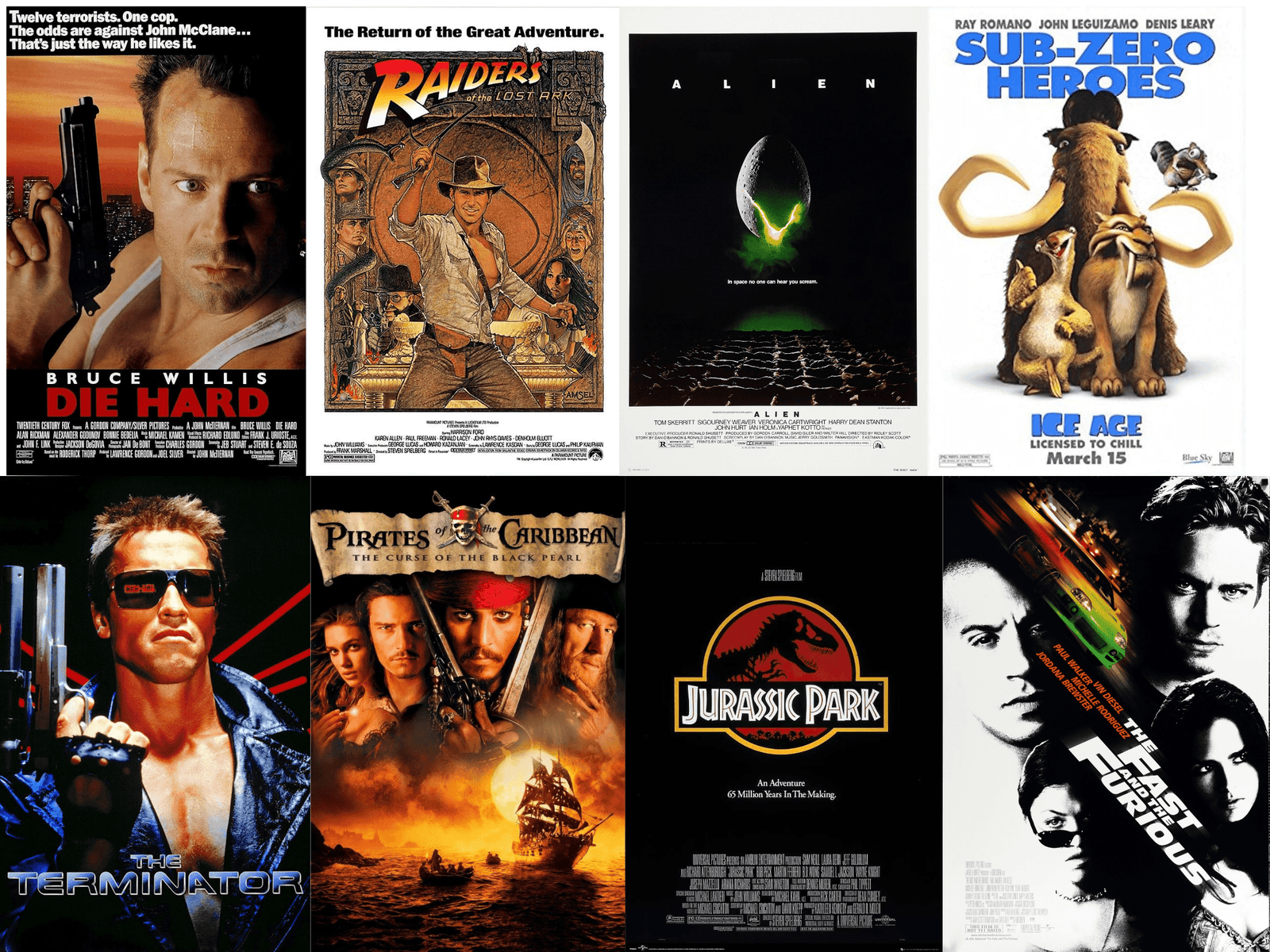
10. Ice Age
 The Tipping Point: Ice Age: Collision Course (2016)
The Golden Age: The first Ice Age was a near-perfect animated film. It was funny, heartfelt, and visually inventive. The simple story of a grumpy mammoth, a dopey sloth, and a stoic saber-tooth tiger forming a reluctant herd to save a human baby had real emotional weight. And let's not forget Scrat, whose desperate, single-minded pursuit of an acorn was pure slapstick genius.
The Downward Spiral: With each new movie, the herd got bigger, the stakes got more ridiculous, and the charm got thinner. The focus shifted from clever character dynamics to frantic, loud action for the youngest possible audience. The plots went from surviving the elements to escaping dinosaurs, fighting pirates on a melting iceberg, and eventually, trying to stop an asteroid. Collision Course was the final straw, a noisy and nonsensical story that had lost any connection to the heart that made us love the original.
The Final Verdict: This franchise is a fossil of its former self and should be left frozen in time.
9. Resident Evil
 The Tipping Point: Resident Evil: The Final Chapter (2016)
The Golden Age: Let's give credit where it's due: the first Resident Evil knew exactly what it was. It was a stylish, B-movie action-horror flick that captured the video game aesthetic and gave us an iconic action hero in Milla Jovovich's Alice. It was schlocky, but it was fun, self-contained, and had some genuinely cool moments.
The Downward Spiral: The plot of this series is one of the most baffling, retcon-heavy messes in cinematic history. Characters appeared and disappeared, clones were introduced, and Alice’s backstory was rewritten with every single entry. By the time we reached The Final Chapter, the story was so convoluted it was impossible to follow or care about. The frenetic editing and reliance on endless CGI battles didn't help. The 2021 reboot, Welcome to Raccoon City, proved that even starting from scratch couldn't save it.
The Final Verdict: The Umbrella Corporation's cinematic experiments have failed. It's time to permanently contain this outbreak.
8. Die Hard
 The Tipping Point: A Good Day to Die Hard (2013)
The Golden Age: Die Hard is, without exaggeration, a perfect action movie. John McClane was the ultimate everyman hero—a smart-mouthed, vulnerable cop who was in way over his head, bled, and barely survived. That’s what made him great. Even Die Hard with a Vengeance cleverly expanded the formula by giving him a great foil in Samuel L. Jackson.
The Downward Spiral: Somewhere along the line, Hollywood forgot what made McClane special. He went from being a man to being a myth. Live Free or Die Hard had him taking down a fighter jet with a semi-truck, but A Good Day to Die Hard was the final insult. It turned him into a grumpy, invincible Terminator, stripped him of his wit, and dropped him into a generic, soulless shoot-em-up in Russia. He wasn't a character anymore; he was a brand name.
The Final Verdict: Yippee-Ki-Yay, let the franchise die.
7. Pirates of the Caribbean
 The Tipping Point: Pirates of the Caribbean: Dead Men Tell No Tales (2017)
The Golden Age: It's hard to overstate what a breath of fresh air The Curse of the Black Pearl was. It was a thrilling, funny, and genuinely inventive swashbuckler. Johnny Depp's Captain Jack Sparrow was a lightning-in-a-bottle performance—an eccentric, unpredictable force of nature who elevated the whole film. He was the chaotic spice, not the main course.
The Downward Spiral: The franchise's compass has been broken for years. Jack Sparrow went from a unique character to a tiresome caricature, stumbling through every scene with the same drunken shtick. The plots became an incomprehensible soup of sea goddesses, ghost ships, and magical MacGuffins. Each film felt like a desperate attempt to recreate the magic of the first, but the ride was over, leaving us with a bloated, noisy, and joyless spectacle.
The Final Verdict: This ship has sailed. It’s time to drop anchor in retirement for good.
6. Indiana Jones
 The Tipping Point: Indiana Jones and the Kingdom of the Crystal Skull (2008)
The Golden Age: The original Indy trilogy is sacred ground. It’s the pinnacle of adventure filmmaking, a perfect cocktail of thrilling stunts, charismatic swagger, and a tangible sense of wonder. Indy punched Nazis, discovered the Ark of the Covenant, and found the Holy Grail. The stories felt grounded in a version of history and myth that was exciting and believable.
The Downward Spiral: The magic vanished the moment Indy survived a nuclear blast by hiding in a refrigerator. Kingdom of the Crystal Skull traded the series' gritty, practical feel for distracting CGI (those monkeys!) and swapped compelling mythology for B-movie aliens. While the recent Dial of Destiny tried to recapture the old spirit, it mostly just reminded us that some adventures have a natural, and perfect, ending—in this case, riding off into the sunset in The Last Crusade.
The Final Verdict: Some artifacts, and some film legacies, are best left undiscovered.
5. Alien
 The Tipping Point: Alien: Covenant (2017)
The Golden Age: The 1979 Alien is a masterpiece of "haunted house in space" horror. The Xenomorph was terrifying precisely because we knew nothing about it—it was a truly alien nightmare. James Cameron's Aliens brilliantly pivoted to high-octane action without losing the terror. They are two of the greatest sci-fi films ever made.
The Downward Spiral: The prequels, Prometheus and Covenant, committed the ultimate sin: they explained the monster. The decision to demystify the Xenomorph, revealing its origins through the philosophical musings of a rogue android, robbed it of all its cosmic horror. The universe felt smaller, the monster felt less scary, and the focus shifted from palpable terror to convoluted mythology.
The Final Verdict: In space, no one can hear you beating a dead Xenomorph.
4. Jurassic Park / World
 The Tipping Point: Jurassic World Dominion (2022)
The Golden Age: The original Jurassic Park is pure movie magic. It filled us with a sense of awe and terror that has rarely been matched. It was a smart, thrilling blockbuster that balanced its groundbreaking special effects with compelling characters and genuine ethical questions about the dangers of unchecked ambition.
The Downward Spiral: Jurassic World was a fun and wildly successful reboot, but the sequels couldn't figure out where to go next. Fallen Kingdom devolved into a bizarre dinosaur auction in a gothic mansion. Then Dominion completely abandoned the core concept, giving us a globe-trotting spy thriller about genetically engineered locusts, where the dinosaurs felt like a complete afterthought. The awe was gone, replaced by a convoluted plot that nobody wanted.
The Final Verdict: This franchise has devolved; it's time to let it go extinct.
3. Transformers
 The Tipping Point: Transformers: The Last Knight (2017)
The Golden Age: Look, the first Transformers movie was never a critical darling, but it delivered on its core promise: giant robots fighting. It was loud, dumb, spectacular, and for a generation that grew up with the toys, it was undeniably awesome to see Optimus Prime on the big screen. The 2018 Bumblebee spin-off even proved a heartfelt, character-driven story was possible.
The Downward Spiral: The "Bayhem" formula quickly grew toxic. Coherent plots were replaced by visual chaos, characters were reduced to stereotypes, and the humor became increasingly juvenile. The Last Knight was the absolute nadir, a film that tried to create a secret history linking the Transformers to King Arthur and Merlin. It was an incomprehensible, migraine-inducing mess that signaled the creative tank was not just empty, but had been sold for scrap.
The Final Verdict: These robots are in desperate need of one final transformation: into a retired franchise.
2. Terminator
 The Tipping Point: Terminator Genisys (2015)
The Golden Age: The Terminator and T2: Judgment Day are a one-two punch of sci-fi action perfection. They created one of cinema's greatest heroes in Sarah Connor and one of its greatest villains in the T-800 (who then became a hero!). T2 provided what felt like the definitive, emotionally resonant conclusion to the story. There was no fate but what we make.
The Downward Spiral: Everything after T2 has been a desperate, failed attempt to undo that perfect ending. We've had multiple timeline resets, constant re-castings, and plots so confusing they make your head spin. Genisys was the worst offender, a film that treated the original's sacred timeline like a child's Etch A Sketch. Even bringing back Linda Hamilton and James Cameron for Dark Fate couldn't erase decades of damage. The audience was just too tired of being told to forget the last movie they saw.
The Final Verdict: The future of this franchise is not set. The best possible future is one where it doesn't get made.
1. Fast & Furious
 The Tipping Point: F9 (2021)
The Golden Age: Let’s be honest, the transformation of this franchise from a simple story about street racers into a global espionage saga was nothing short of miraculous. For a moment, they found the perfect formula. Fast Five is a surprisingly perfect action-heist flick that knew exactly what it was and embraced the fun. The crew was great, the stakes felt right, and the action was inventive.
The Downward Spiral: The problem is, how do you top perfection? The answer, apparently, was to ignore the laws of physics entirely. The "endless runway" in Fast 6 was a warning sign. By the time we got to cars parachuting from a plane, secret government super-weapons, and the sudden appearance of a long-lost secret sibling (the most tired trope in the book), the series had lost its grip on reality. F9, with its infamous Pontiac-in-space sequence, wasn't just a shark-jump; it was a shark-jump from a rocket ship on its way to the moon. The heartfelt themes of "family" now feel like a contractual obligation shouted between explosions.
The Final Verdict: For the sake of "family," and for the sanity of the audience, it’s time to find a finish line and park it for good.
In the end, this all comes from a place of love. Great stories deserve a beginning, a middle, and a powerful end. An ending is what gives a story its meaning. Letting our favorite cinematic tales fade into a haze of forgettable sequels and cynical cash-grabs is the real tragedy. A dignified conclusion isn't a failure; it's a victory lap.
But that's just my list, born from years of watching these series soar and then stumble. Now I want to hear from you.
What's the one franchise that you think has long overstayed its welcome? Which movie broke your heart with a terrible sequel? Or is there one on this list that you'll defend to the death?
Drop your thoughts in the comments below—let's talk movies!